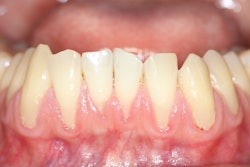
Scaling and root planing (SRP) may be an effective treatment for improving tooth stability and lowering the risk of tooth loss in patients with gum disease, according to a study recently published in the Journal of Periodontology.
Furthermore, factors, including smoking, diabetes, and severe periodontal disease, may reduce treatment success. Identifying these factors may help clinicians set realistic expectations and determine when more intensive treatment is needed, the authors wrote.
“Scaling and root planing was found to be effective at reducing tooth mobility, with a substantial proportion of teeth improving to a lower mobility class or becoming clinically stable,” wrote the authors, led by Dr. Georgios S. Chatzopoulos of the University of Minnesota School of Dentistry (J Periodontol, January 19, 2026).
The study examined changes in clinical tooth mobility after SRP and identified baseline factors associated with outcomes at 12 months. Researchers conducted a retrospective cohort analysis using de-identified electronic health records (EHRs) from the BigMouth Dental Data Repository, covering data from 2011 to 2021. The final sample included 152 patients and 489 teeth with baseline mobility classified as Class 1 (slight mobility), 2 (moderate mobility), or 3 (severe mobility), they wrote.
Patient data included age, sex, smoking status, and self-reported diabetes, while tooth-level data included probing depth, clinical attachment loss, furcation involvement, and mobility class. Tooth mobility changes were assessed from pretreatment baseline to follow-up examinations at approximately 12 months, with changes in mobility class serving as the primary outcome.
SRP led to a significant reduction in tooth mobility at the 12-month follow-up. Among teeth with mild baseline mobility, 71.2% became clinically stable, while 86.3% of teeth with moderate mobility improved to a lower mobility class. Even teeth with severe baseline mobility showed improvement, with more than 61% shifting to a less mobile state, and worsening mobility was uncommon, they wrote.
Multilevel ordinal logistic regression identified higher initial mobility, deeper probing depths, furcation involvement, smoking, and diabetes as significant predictors of poorer outcomes. In contrast, the use of splinting or stabilization more than doubled the odds of achieving a more favorable mobility class at 12 months.
However, the study had limitations. The data came from uncalibrated EHRs across multiple providers, so there is a risk of information bias and reduced consistency in how tooth mobility was assessed, the authors added.
“This research provides evidence that this routine therapy is effective in tightening loose teeth, which can help dentists and patients to make better-informed decisions about saving teeth and maintaining oral health,” they concluded.