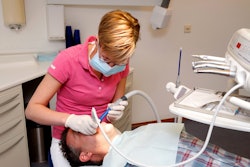
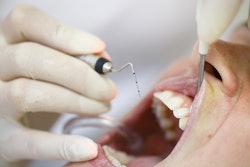
We talk about dental hygienists' daily armamentarium. Typically, a mirror, an explorer and a scaler are pictured. However, did you know that a microscope could be involved?
Now, more than ever, we are closer to improving dental hygiene through the oral-systemic link and by incorporating whole-body health. In this article, I interviewed Barbara Tritz, a biological dental hygienist who does this daily.
 Tracee Dahm, MS, RDH.
Tracee Dahm: What motivated you to become a biological hygienist?
Barbara Tritz: I went into dental hygiene because I wanted to be a healer. I've always been fascinated by the human body and drawn to medicine.
I wanted to be part of a profession centered on health, not just procedures. But my first year in clinical practice left me discouraged and disillusioned. I felt like a hamster on a wheel, rushing patients in and out, "cleaning teeth," handing them a toothbrush as I walked them to the front desk, and constantly running behind. I was surrounded by dental disease and had no time -- or tools -- to help patients truly heal.
Eventually, I left clinical hygiene and earned a master's degree in business, but my heart never left medicine. I moved into dental sales, and that's when everything changed. One day, I walked into a dental office that had a phase-contrast microscope in the hygiene operatory. Seeing live oral pathogens for the first time changed my life; suddenly, disease made sense. I could see what I was treating. I asked that dentist for a job on the spot, and thankfully, he said yes.
That was in 1985, and it marked the beginning of my true healing journey. Yet even then, I was frustrated. I was seeing patients with excellent oral hygiene who still had pathogenic biofilms and active dental caries.
I knew I was missing something -- actually, many things. That curiosity led me through decades of continuing education, reading, and exploration of oral-systemic connections, eventually to biological dentistry.
What's remarkable is that I didn't even know the term "biological dental hygienist" existed until eight years ago -- 36 years into my career. For the first time, I had answers to the why behind decay, bone loss, bleeding gums, and broken teeth.
Today, I practice in a biological dental office that prioritizes root causes, prevention, and patient education. We are given the time to think, investigate, and treat without cutting corners.
Patients come to us because they want to be healthy, and it's our role to sleuth out why disease is showing up. We look beyond the mouth to diet, airway, sleep, malocclusion, nutrients, gut health, stress, inflammation, and blood sugar. It's no longer about removing calculus -- it's about understanding the host response and why the biofilm has become dysbiotic. This is healing! We do this through the oral cavity.
Can you describe your typical workday as a biological hygienist?
I see five patients per day. Adults are scheduled for 90 minutes, and children for 60. That time is essential. It allows me to build trust, educate, and truly partner with patients in their health.
After disclosing, patients hold the toothbrush themselves and learn how to brush, floss, or tongue scrape effectively. They see the blue, acidic plaque firsthand. I have time to perform thorough periodontal charting; review their medical history; and discuss airway, sleep, and root causes of disease.
I still wish I had more time, but this schedule allows me to slow down, provide deeper education, and give patients the information and homework they need to continue their healing journey outside the office.
How does an RDH become a biological hygienist?
 Barbara Tritz, RDH.
I am an active member of the International Academy of Oral Medicine and Toxicology and the International Academy of Biological Dentistry and Medicine. Both organizations offer accreditation programs that cover the foundational principles of biological dentistry. They also host one to two conferences per year, along with monthly continuing education webinars, enabling clinicians to stay current as science and clinical understanding evolve.
How is your role more than oral pathogen or salivary testing?
Salivary diagnostics are just one piece of the puzzle. I have many tools at my disposal: phase-contrast microscopy, oxygen-ozone therapy, lasers, guided biofilm therapy, and air polishing.
While I still perform traditional scaling, it is the least important part of my work. My role involves supporting the immune system, understanding the patient's full health history, and identifying the underlying cause of the disease.
I collaborate with airway-focused physicians; myofunctional therapists; chiropractors; allergists; ear, nose, and throat (ENT) specialists; and primary care providers. Healing happens when we address root causes, not just symptoms.
Where do you see biological hygienists evolving as oral-systemic links expand?
Our profession is at a crossroads. Skill creep is real, and dental assistants are now being allowed to scale in some states. While this concerns many hygienists, I see it as an opportunity. This is our moment to evolve and to shine. We must move beyond the outdated "cleaning" model and fully embrace our role as oral health practitioners.
For those who want more than pick, polish, and pray, this is a call to step into prevention, nutrition, airway health, and systemic wellness. We must practice to the level of our license or risk becoming obsolete.
What inspired you to launch the 'Queen of Dental Hygiene' blog?
My daughter deserves the credit. Eleven years ago, she encouraged me to start writing because I was constantly sharing "nuggets" of information with my patients. I didn't think I could write, and I didn't think anyone would want to read content from a dental hygienist, but I was wrong on both counts.
I discovered that I love writing, researching, and translating complex health information into language the public can understand. The blog grew into a platform that gently nudges both patients and professionals to think differently. It ultimately opened the door for international speaking and gave me the confidence to push the boundaries of what dental hygiene can be.
What advice would you give dental hygiene students?
Be curious. Your dental hygiene license is a license to learn. Take nutrition courses. Learn about airway, breathing, sleep, and facial development. Study how the body heals, which includes digging deep into the cellular level of the mitochondria, voltage, micronutrient deficiencies, and so much more. Ask why. Dentistry doesn't stop at the gingival margin, and neither should you.
What advice would you give hygienists looking to expand their careers?
We must stop waiting for permission and stop expecting our dentists to pay for our education. When we invest in our own learning, something powerful happens: Confidence follows. Ownership changes how we show up, how we speak to patients, and how we collaborate with other health care professionals.
Dental hygienists are uniquely positioned as prevention specialists. We see more patients frequently than most health care providers, and we have unparalleled access to early warning signs of systemic dysfunction.
Our training should not stop at scaling and polishing. We must expand into nutrition, airway health, breathing and sleep disorders, myofunctional therapy, inflammation, blood sugar dysregulation, and the oral-systemic connections that drive chronic disease.
This expansion also opens doors beyond the traditional operatory. Hygienists can work alongside cardiologists, ENTs, allergists, sleep physicians, chiropractors, and functional medicine practitioners educating patients on how to breathe, swallow, chew, nourish their bodies, and support brain and cardiovascular health. We can speak to schools, community groups, and the public about prevention in a way no other profession can.
We are not "just" dental hygienists. We are oral health practitioners, educators, and advocates for whole-body wellness. The mouth is our portal, but prevention is our purpose. When we embrace that role fully, we not only expand our careers but also help elevate and future-proof our profession.
How does myofunctional therapy tie into biological hygiene?
Orofacial myofunctional therapy is the other half of dental hygiene care. If a patient mouth-breathes, they will develop caries, periodontal disease, broken teeth, recession, malocclusion, and eventually sleep apnea and systemic inflammation.
Once hygienists understand the airway and its function, they can never return to a purely mechanical model of care. It lifts the veil on the root causes of disease.
If you could change anything about your career, what would it be?
I wish it hadn't taken me over four decades to learn what I know now. That's why my colleagues Frances Horning and Kathryn Gilliam and I founded the Boost Oral Health Institute, to accelerate learning for the next generation.
Boost (biological options for oral systemic health) offers immersive retreats and ongoing study groups to help hygienists evolve into confident oral health practitioners prepared for 21st-century care.
If you'd like to hear more about Tritz's career and her day-to-day operations, you can join her for an online webinar at the end of January.
Tracee S. Dahm, BSDH, MS, is an adjunct instructor for the North Idaho College School of Dental Hygiene. In addition, she serves as an educator and moderator at Young Innovations. She is a key opinion leader in cutting-edge hygiene innovations and is currently conducting a scoping review on access to care for the institutionalized elderly population. Dahm's additional scholarly work includes research on periodontal pathogens, and her ongoing interests span emerging trends in dental hygiene, strategies to improve access to oral care for the underserved, and the role of mental health in dentistry. She can be reached at [email protected].
The comments and observations expressed herein do not necessarily reflect the opinions of DrBicuspid.com, nor should they be construed as an endorsement or admonishment of any particular idea, vendor, or organization.