The dental industry stands at an inflection point. After years of disruption (from pandemic-related closures to workforce upheaval), 2025 marked a year where transformative technologies and generational shifts converged to fundamentally reshape how dentistry is practiced, staffed, and experienced by patients.
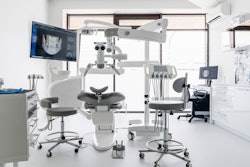
Walk into a modern dental practice today and you'll see AI algorithms flagging potential cavities on radiographs, 3D printers fabricating same-day crowns in the back office, and digital scanners replacing traditional impressions.
Meanwhile, the faces behind the masks are changing as well. There is a new generation of dentists who grew up with smartphones and expect their practices to operate with the same technological sophistication they experience in other aspects of their lives.
But technology alone doesn't tell the complete story. Persistent staffing shortages continue to challenge even the most innovative practices, forcing dentists to rethink not just how they deliver care but who delivers it and how they retain talent in an increasingly competitive labor market.
As we examine the top five trends that defined dentistry in 2025, one thing becomes clear: The practices that thrive won't be those that simply adopt new tools. They will be the ones whounderstand how these trends interconnect and use them strategically to build more efficient, patient-centered, and sustainable operations for the future.
1. AI-driven diagnostics and treatment planning
 Adobe Stock.
Dental imaging powered with AI is transforming how clinicians diagnose conditions, with machine-learning algorithms detecting cavities, periodontal disease, and other oral health issues with unprecedented accuracy.
Roughly 35% of dental offices have now implemented AI in patient treatments, with 77% reporting positive experiences, and 59% of patients expressing greater trust in their dentists' recommendations when AI is used. AI is no longer limited to diagnostics. It's actively helping plan treatment and predict patient outcomes.
Article to read: AI may predict orthodontic extractions
2. 3D-printing revolution
3D printing is now one of the most impactful technologies in dental labs and clinics, drastically reducing turnaround times for crowns, bridges, dentures, and surgical guides. The global 3D printing market in dentistry is expected to reach $8.1 billion by 2029.
A recent study reported that 15% of dental practices in the U.S. use a 3D printer, with more practices having printers than mills for their in-office workflows. The technology allows for greater customization and precision at lower costs than traditional methods.
Article to read: What dentists are saying about 3D printing
3. Persistent staffing challenges
 Adobe Stock/Andriy Blokhin.
The three biggest concerns dentists have going into 2025 are staffing shortages, dealing with insurance, and rising overhead costs -- the same issues from 2024. In 2024, 60% of dentists indicated staffing recruitment was their top challenge.
However, there is hope as enrollment in dental assistant and hygienist programs has been rising -- some forecasts for hiring in the dental space are more optimistic about the long-term health of the dental market.
Could virtual front offices help lighten the load? How will oral preventive assistants make a difference? There are plenty of questions lingering about 2026 and staffing.
Article to read: Why oral preventive assistants will not replace hygienists
4. Enhanced patient experience and digital workflows
According to industry data, intraoral scanner use in the U.S. reached 57% in 2025, with scanners evolving beyond digital impressions to become central to diagnostics, treatment planning, and patient communication. Patient engagement is enhanced by the integration of mobile apps, facilitating seamless scheduling, payments, and access to treatment information.
Practices are also transforming into more comfortable environments with amenities like noise-canceling headphones and massage chairs to reduce dental anxiety.
Article to read: What to know about the accuracy of intraoral scanners
5. Generational shift in the dental workforce
 Adobe Stock/luckybusiness.
The industry is experiencing a big retirement boom among baby boomer dentists. Dental school graduating classes are now 57% female, representing different profiles and personalities entering dentistry.
Younger dentists are more comfortable with technology and expect practices to embrace digital workflows, AI-supported diagnostics, advanced imaging, paperless systems, and outsourced administrative roles they view as inefficient. This generational transition is fundamentally reshaping practice operations, marketing strategies, and technology adoption rates.
Interview to hear: What is happening to the next generation of dental leaders?
These trends are interconnected: AI and 3D printing address efficiency needs created by staffing shortages while younger dentists are driving faster technology adoption to meet evolving patient expectations. Practices that embrace these changes are positioning themselves for success in an increasingly competitive and technology-driven landscape.