Novel dental therapies may serve as effective adjunctive treatment options for managing obstructive sleep apnea (OSA) and snoring, according to a study recently published in the Journal of the American Dental Association.
Furthermore, therapies such as myofunctional therapy may be useful when standard treatments fail or when patients prefer other treatments, the authors wrote.
“Dentists can contribute to multidisciplinary sleep care through established therapies, selective use of emerging interventions, and early recognition of airway growth issues,” wrote the authors, led by Dr. Michael Simmons, MPH, of the Encino Center for Sleep and TMJ Disorders in California (JADA, January 2026, Vol. 157:1, pp. 10-19).
The study aimed to synthesize the 2024 American Academy of Dental Sleep Medicine (AADSM) consensus report on the evidence supporting new and emerging dental interventions for sleep health and sleep-related disorders. The analysis reviewed the AADSM consensus panel report and its cited peer-reviewed studies, along with additional literature on dental treatments for OSA and snoring without OSA, they wrote.
Areas of focus included premolar extraction for orthodontics, expansion orthodontics, myofunctional therapy, frenum release, and laser therapies. To manage the evidence, outcomes were organized by patient population (adults versus children) and condition (OSA versus snoring), resulting in four subgroups.
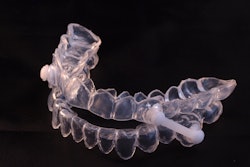
No emerging dental therapy met the criteria to serve as a standalone substitute for mandibular advancement devices in treating OSA or snoring. Some approaches may play adjunctive or individualized roles when established therapies are ineffective or declined. Evidence did not support orthodontic extractions as either a risk factor for OSA or a therapeutic option, while expansion orthodontics showed limited potential benefit in some pediatric cases without consensus for first-line use, the authors wrote.
Myofunctional therapy was viewed as low risk with modest evidence for symptom management, particularly when started early, but not for prevention or cure, and its time demands may limit adult use. Frenum release and ablative laser therapies were strongly discouraged due to a lack of evidence and potential risks, while nonablative laser treatments showed only short-term promise for snoring.
However, this study was limited by inconsistent study designs and narrow sample diversity, highlighting the need for standardized protocols and more diverse, clearly defined cohorts to improve clinical relevance, the authors added.
“Dentistry cannot yet offer robust evidence on new therapies to substitute for mandibular advancement devices at a first-line treatment level but it can contribute meaningfully to multidisciplinary care and prevention research,” Simmons and colleagues concluded.